ServicesRoof Treatments
Guilderland Roof Treatments
Green moss and dark streaks aren't just an eyesore. They keep your shingles wet and shorten their life. Our mild treatment kills the growth down to the root, and we never put a pressure washer on the roof.
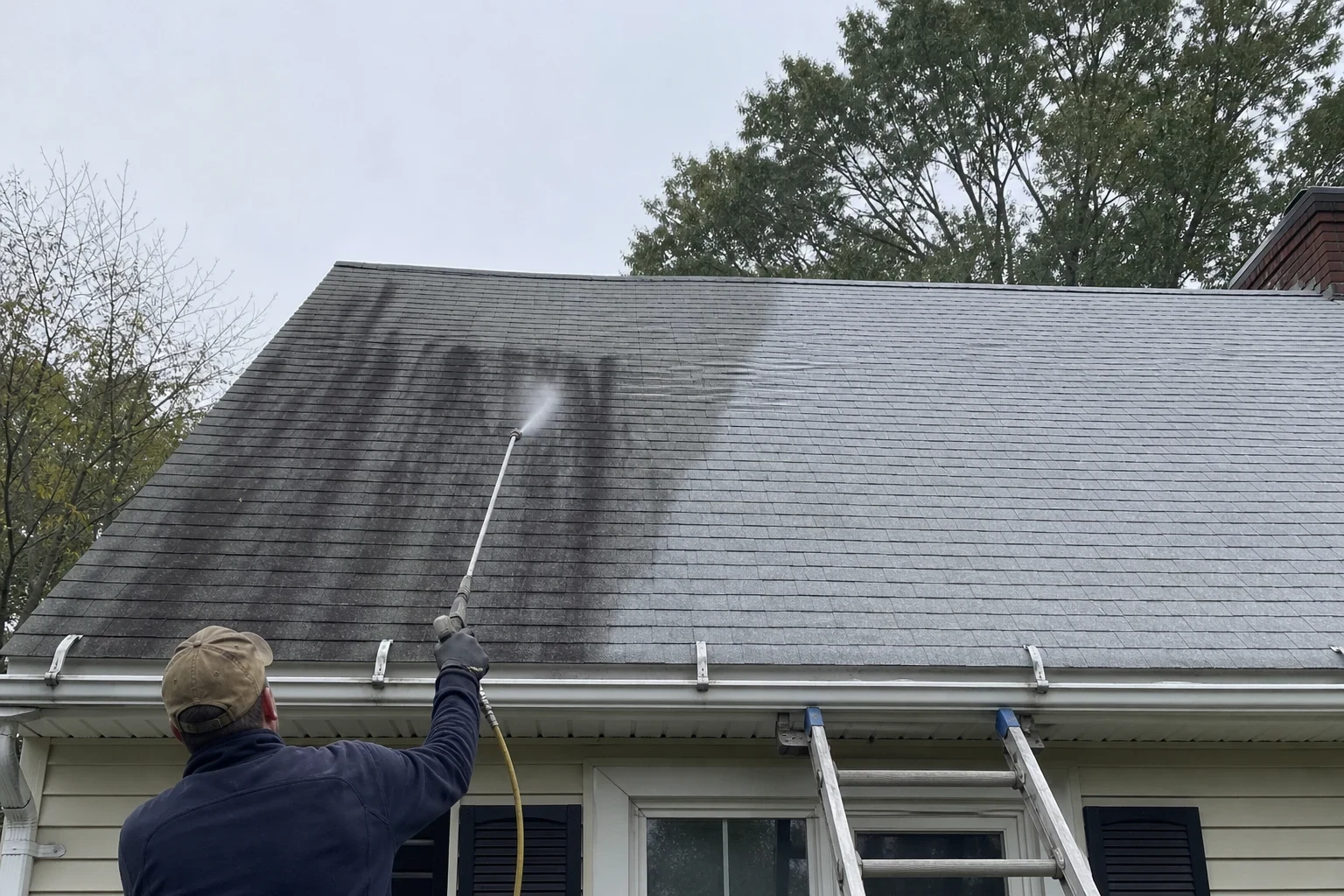
What a Roof Treatment Does
A roof treatment is a liquid we apply to your shingles at low pressure. It kills algae, moss and lichen where they grow. Over the next few weeks, rain carries the dead growth off the roof. The shingles are never blasted, so the protective granules stay where they belong.
Here is why it matters for your wallet. Moss acts like a sponge. It keeps the shingles damp, pushes up their edges and lets water work underneath. A roof that should last its full rated life can need replacing years early. A treatment costs a small slice of what a new roof does, and treating again every few years keeps that gap working in your favor.
We will tell you straight if a treatment is the right call. If shingles are already curled, cracked or missing, we say so, because treatment will not fix a roof that is worn out.
What Your Roof Treatment Includes
- A close look first
- We check the roof from the ground and the ladder. We note where growth is heaviest and whether any shingles look damaged.
- Plant and siding protection
- We wet down and cover shrubs and flower beds near the drip line. We rinse nearby siding and walks so overspray does not sit on them.
- Low-pressure application
- The treatment goes on with a gentle spray, about like a garden hose. Nothing is scraped or blasted off your shingles.
- Extra attention on shaded slopes
- North-facing sides and areas under trees grow the most moss. We make sure those spots get full coverage.
- Photos and plain notes
- You get photos of what we found and a short note on the roof's condition. That gives you a baseline for later.
- Cleanup before we leave
- Covers come off, plants get a final rinse and your yard is left the way we found it.
How to Tell Your Roof Is Due
Black streaks down the slope
Most of those dark lines are algae living off the limestone filler in asphalt shingles. Left untreated, they grow every year.
Soft green moss
Moss tucked into seams and along the bottom edges traps water. Of all the growth, it's the one most apt to pry shingles up.
Crusty patches in gray or green
Those patches are lichen. It holds on hard and wears away the shingle surface little by little.
One slope is always worse
Once a long, damp Capital Region winter ends, the shady slope can stay wet for days. Growth on that side means the roof isn't drying.
Moss falling off the roof
When chunks of moss show up on the walkway or in the gutters, the growth has taken firm hold.
What Moves the Price
We give you a written price after we see the roof, and the quote is free. The number depends on a few honest things. We explain each one so you can weigh the cost against what it saves you down the road.
Roof size
More square footage means more treatment and more time on the ladder.
Pitch and height
A steep or tall roof needs more setup and more care to work safely.
How much growth
Light streaks take less product than thick moss. Heavy lichen may need a second pass.
Access around the house
Tight side yards, decks and dense plantings take longer to protect and work around.
How the Job Goes on the Day
- 1
Quick walk-around
We arrive, look at the roof and point out anything you should know. You do not need to be home, but you are welcome to be.
- 2
Protect the yard
We soak and cover plants, move outdoor furniture out of the way and set ladders with pads so gutters are not dented.
- 3
Apply the treatment
We work slope by slope, top down, with a low-pressure spray. Most homes take a few hours.
- 4
Rinse and tidy up
We rinse plants and surfaces below the roof and pack up. Then the weather does the rest. Streaks fade over the following weeks as rain washes the dead growth away.
Roof Treatment Questions
Will the streaks be gone the same day?
Usually not, and that is normal. The treatment kills the growth right away, but rain needs a few weeks to carry it off. Moss dries, loosens and falls away over time. Pulling it off by hand can tear the shingles, so we let it go naturally.
Is this safe for my plants and pets?
We take care around them. We wet down and cover plants before we start and rinse them after. Keep pets inside while we work and until the roof and yard have dried.
Why not just use a pressure washer?
High pressure strips the granules that protect shingles from sun and weather. That can take years off a roof in one afternoon. A low-pressure treatment kills the growth without that damage.
How often should a roof be treated?
It depends on shade, trees and how wet your roof stays. Many roofs do well with a treatment every few years. We will tell you what we see on yours instead of putting you on a schedule you do not need.
Can you treat a roof that has damage?
We can treat it, but we will tell you about the damage first. If the shingles are near the end of their life, treatment may not be worth your money. We would rather say that up front.
Learn What Your Roof Needs
Let us know what's growing up there. We'll take a look, give you an honest answer and put the price in writing. If you're in Guilderland, Westmere, Voorheesville or a town nearby, you can get your quote over the phone.